Uganda’s economy posted an 8.5 percent growth in the second quarter of FY 2025/26, powered by a sharp surge in exports and rising investment, according to the latest Performance of the Economy Report released in March 2026 by the Ministry of Finance, Planning and Economic Development.
Data drawn from the Uganda Bureau of Statistics shows export earnings jumped by 72.1 percent, climbing from $844.6 million (about Shs3.3 trillion) in January 2025 to $1.45 billion (about Shs5.6 trillion) in January 2026.
The export surge, largely driven by gold, coffee, electricity, industrial products and oil re-exports, pushed Uganda into a trade surplus of $147.26 million (about Shs568 billion) in January 2026. This marks a significant recovery from a $206.43 million deficit (about Shs797 billion) recorded in December 2025 and a $215.28 million deficit (about Shs832 billion) in January 2025.
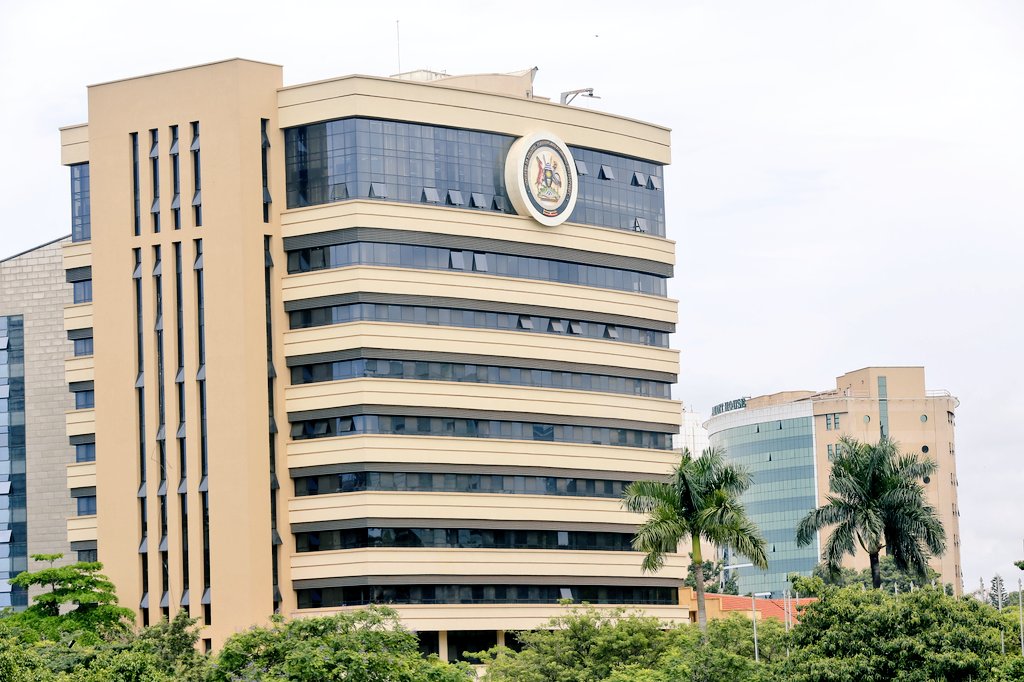
Ministry of Finance building in Kampala
The report further shows that economic activity remained upbeat in February 2026, with improved business conditions and increased employment levels. Key indicators, including the Purchasing Managers’ Index (PMI) and Business Tendency Index (BTI), remained above the 50 mark, pointing to sustained expansion and growing business confidence.
Inflation continued on a downward trend, easing to 2.9 percent in February 2026 from 3.2 percent the previous month, mainly due to slower increases in service costs such as international air travel and healthcare.
Meanwhile, the Bank of Uganda held the Central Bank Rate at 9.75 percent for the seventeenth straight month, maintaining a balance between supporting growth and keeping inflation near the medium-term target of 5 percent.
The February 2026 report paints a picture of an economy gaining momentum, supported by strong export performance, stable prices and improving private sector activity.