

According to the statement signed by Permanent Secretary Vincent Waiswa Bagiire, a group of eight individuals whose cases had been approved by a US immigration judge arrived in Uganda on April 1, 2026, and their protection requests are now being handled locally. The government noted that details of the individuals remain confidential for privacy reasons, but reaffirmed its “longstanding commitment to providing sanctuary to persons in need.”
This development comes amid mounting backlash from legal bodies. Earlier, the Uganda Law Society, alongside the East Africa Law Society, alleged that a separate group of deportees had been forcibly removed from the US and “dumped” in Uganda through what they described as a “dehumanising process.” The lawyers’ bodies say they have already petitioned courts in Uganda to halt the arrangement, citing lack of transparency, absence of parliamentary oversight, and potential violations of human rights.
The legal challenge is expected to test the limits of Uganda’s international commitments against domestic constitutional safeguards, particularly on issues of sovereignty, due process, and the treatment of non-citizens.
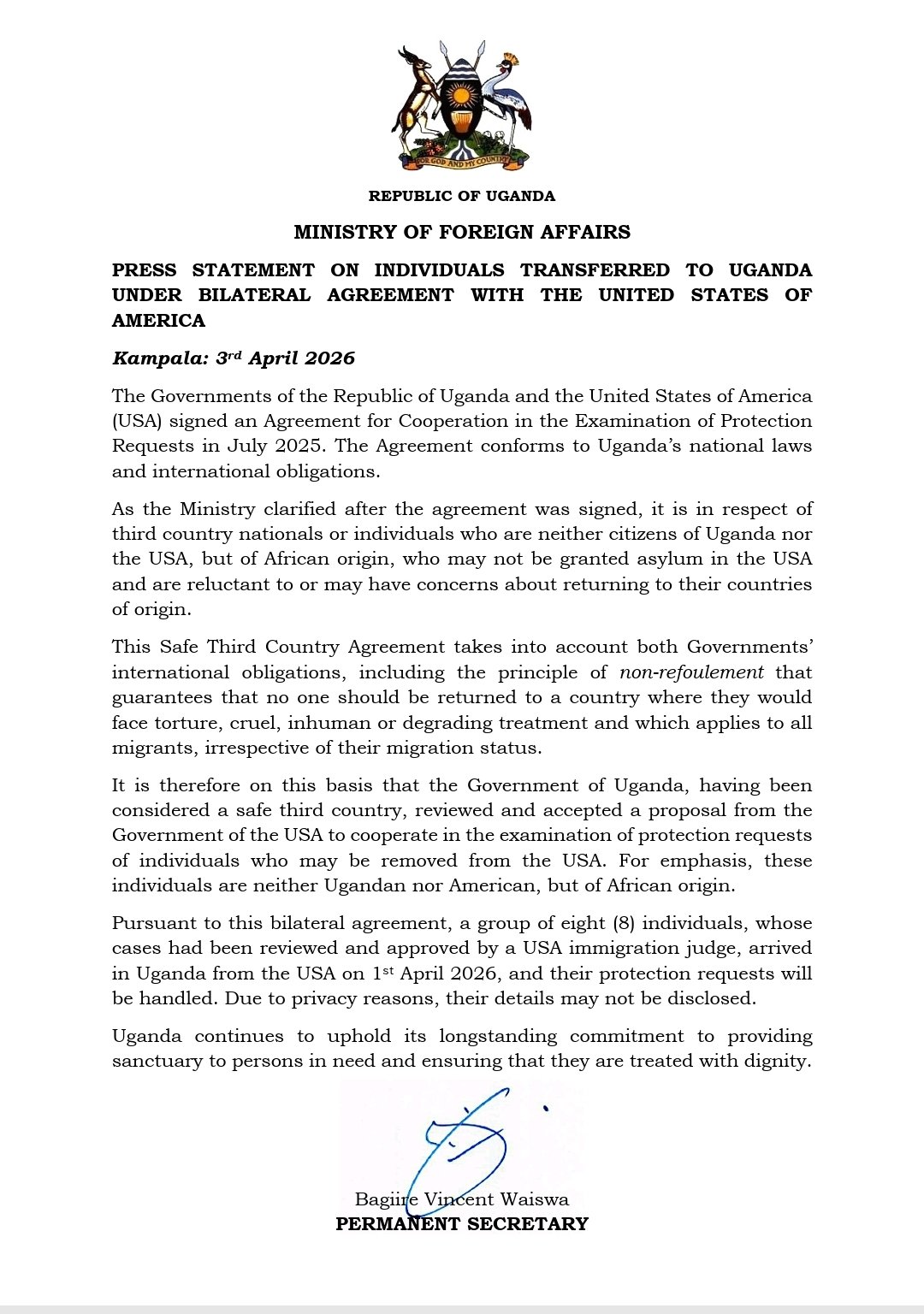
While the government maintains the process is structured, lawful, and humane, critics argue that the broader implications, especially Uganda’s role in global migration control require deeper public scrutiny.