

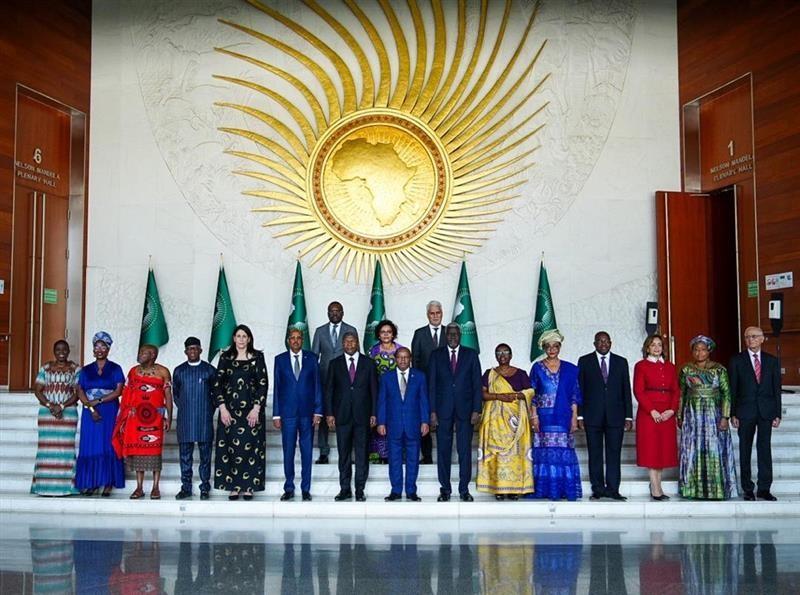
On paper, Africa has made serious efforts to come together. The African Union (AU) stands as the continental body meant to give Africa one voice on global issues. In our region, the East African Community (EAC) brings together Uganda, Kenya, Tanzania, Rwanda, Burundi, South Sudan, the Democratic Republic of Congo and Somalia, with the aim of political federation, a common market and free movement of people. COMESA promotes regional trade across Eastern and Southern Africa, while IGAD focuses on peace, security and development in the Horn of Africa. More recently, the African Continental Free Trade Area (AfCFTA) promises to make Africa a single market.
These are not small steps. They show that African leaders understand that unity is power. Yet, on the ground, ordinary Africans still live with deep divisions that undermine these grand projects.

In East Africa, borders may be opening on paper, but minds often remain closed. Cultural identity, which should be a source of pride and richness, is too often used as a political weapon. In Uganda, tribal and cultural loyalties still shape political choices, especially during election seasons. The 2021 general elections exposed uncomfortable truths. In some spaces, leadership was openly discussed not in terms of ideas or competence, but in terms of cultural identity. In the Central region, there is a widespread belief that to be politically accepted, one must be a Muganda. Elsewhere, suspicion is sometimes directed at leaders perceived to come from Ankole or other regions.
These attitudes do not stop at politics. They creep into employment, business and public service. Nepotism based on tribe or region continues to deny opportunities to qualified Ugandans. When jobs are given based on “where you come from” rather than “what you can do,” unity suffers. Trust is lost. Citizens retreat into their cultural corners for safety.
This is not a uniquely Ugandan problem. Across Africa, elections often reopen ethnic wounds. Political parties mobilize support along tribal lines. Historical grievances are recycled for short-term gain. The result is division, fear and sometimes violence. Under such conditions, regional bodies like the EAC struggle to move from agreements to real integration, because unity at the top is weakened by division at the base.
Culture itself is not the enemy. Africa’s cultures are its strength. The problem arises when culture is used to exclude, dominate or silence others. Democracy suffers when voters are told to choose identity over ideas. Development suffers when talent is ignored because it comes from the “wrong” group.
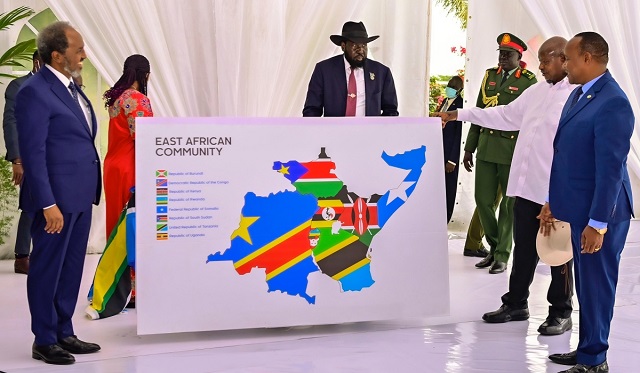
So the hard question must be asked. If Ugandans still struggle to see one another as equal citizens beyond tribe and region, how realistic is a united East Africa? And if East Africa itself is divided, how can Africa truly unite?
The answer lies not only in institutions, but in mindset. African unity will not be achieved by treaties alone. It requires deliberate effort at three levels.
First, leadership must change its language and behavior. Leaders should stop exploiting cultural fears for political survival. They must be seen to appoint, promote and protect citizens based on merit, not kinship. Unity must be practiced, not preached.
Second, citizens must take responsibility. Voters should reward ideas, integrity and competence, not tribal slogans. Employers should hire skill, not surname. Young people, especially, must reject inherited prejudices and build friendships, businesses and movements across cultural lines.
Additionally, education and civic awareness must be strengthened. Schools, media and religious institutions should teach that diversity is not a threat to democracy, but its foundation. Regional bodies like the EAC should invest more in people-to-people integration, not just trade protocols.
African unity begins at home. It begins when a Ugandan sees another Ugandan first as a fellow citizen, not as a tribe. It grows when East Africans trust one another enough to share power, opportunity and space. Only then can the larger African dream move from paper to reality.